Crochet Christmas Candle: Easy Free Pattern for Décor
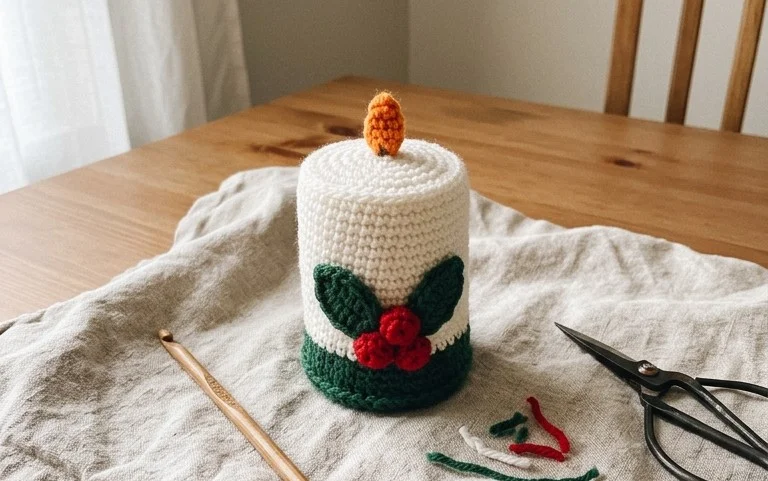
A small crocheted candle brings a soft, handmade touch to a mantel, holiday wreath, or wrapped gift. This flat motif has the familiar shape of a candle with a flame at the top, and its stitched texture gives it a cozy look without needing bulky yarn. Beginners can enjoy the simple rhythm of working rows and shaping the details, while gift makers can finish one in an evening and make a few more for friends. The project is satisfying because each section takes shape quickly, so you can see the candle emerge as you work. You’ll learn how to build the candle body with basic crochet stitches, add the flame, and keep the edges neat. A small amount of yarn is enough to create a cheerful bit of Christmas décor.
Why You’ll Love This Pattern
A firm cotton washcloth with even single-crochet rows is useful at the sink, in the bath, or tucked into a handmade gift set. This beginner pattern uses one stitch throughout, so you can focus on keeping the edges straight instead of learning a complicated repeat.
The small rectangle is easy to carry and can be worked in an evening. Worsted cotton gives the fabric enough body for daily use, and a single solid color makes it simple to see each stitch as you work. Leftover cotton is fine too, as long as you have enough yarn to finish the piece.
The rows were easy to count, and the cotton cloth felt sturdy without being stiff after its first wash.
— Rowan, illustrative sample
Pattern Overview & Skill Level
- Skill Level: Beginner. You need to chain, single crochet, and turn your work.
- Approximate Time: 1½ to 2½ hours, depending on your pace and how often you pause to count.
- Construction: A flat rectangle worked back and forth in rows. There is no border or seaming.
- Finished Dimensions & Sizing: Approximately 21.5 cm wide by 20 cm tall (8½ by 8 inches), before washing. The size is based on the gauge below.
- Gauge: 14 sc and 15 rows measure about 10 cm (4 inches) square. Gauge is not essential for a functional cloth, but it affects the finished size and yarn use.
Materials & Supplies Needed
- Yarn: About 70–90 yards (64–82 m) of worsted-weight (#4) cotton yarn. Use one color or join a second color between rows if you have enough yarn to weave in the ends securely.
- Hook: 5.0 mm / H-8 crochet hook. If your fabric feels stiff, try 5.5 mm / I-9; a larger hook will make a looser, slightly larger cloth.
- Notions: Tapestry needle for weaving in ends, scissors, and a ruler or tape measure for checking gauge.
- Substitutions: Choose cotton or a cotton-rich yarn that can handle frequent washing. A similar-weight cotton blend may feel softer or stretchier. Avoid fuzzy yarn, which can make the stitches harder to see and less practical for wiping. Lighter yarn makes a smaller, thinner cloth; heavier yarn makes a larger, thicker one and usually takes more yardage.
Stitch Guide & Abbreviations (US Terms)
- ch: Chain.
- sc: Single crochet. Insert the hook into the stitch, yarn over and pull up a loop, yarn over again, then pull through both loops.
- st: Stitch.
- sts: Stitches.
- turn: Turn the work around to begin the next row. The turning chain in this pattern does not count as a stitch.
Work under both top loops of each stitch unless the instructions say otherwise. Each row starts with ch 1, which gives you room to turn but does not add a stitch to the row count.
Step-by-Step Pattern Instructions
Washcloth
- Foundation: Ch 31. This chain gives you 30 working stitches because the first sc goes into the second chain from the hook. Keep the chain relaxed; a tight foundation can pull in the lower edge.
- Row 1: Sc in the second ch from the hook and in each ch across. Turn. (30 sts)
- Row 2: Ch 1, sc in each st across. Turn. (30 sts)
- Rows 3–30: Repeat Row 2, keeping 30 sc in every row. Turn after each row. (30 sts per row)
- Finishing: Fasten off, leaving a tail of about 10 cm (4 inches). Pull the tail through the last loop. Thread it onto a tapestry needle and weave it through several stitches on the wrong side, changing direction once so it is less likely to work loose. Trim the remaining yarn close to the fabric without cutting a stitch.
Lay the cloth flat and check that it measures close to 21.5 by 20 cm (8½ by 8 inches). Small differences are normal. If the edges curl, check that you have not skipped the first or last stitch of a row. This pattern has no border, so the row edges are meant to remain simple and flat.
Care & Washing Instructions
- Wash cotton in cool or warm water, up to 40°C (104°F), with similar colors; follow the yarn label if it gives a lower limit.
- Tumble dry on low or lay the cloth flat to air-dry; avoid high heat if the yarn blend includes fibers that may shrink.
- While damp, reshape the corners and smooth the edges flat; blocking is optional for this everyday cotton cloth.
Pro Tips & Common Mistakes to Avoid
- Keep your tension even: Let the foundation chain sit comfortably on the hook rather than pulling each loop tight. If the first row is much narrower than the chain, remake the foundation more loosely or use a larger hook for the chain only.
- Count as you go: Check for 30 stitches at the end of every row. The first and last stitches can be easy to miss, especially when the turning chain does not count as a stitch.
- Hide the yarn ends well: Weave each tail through the backs of several stitches, then change direction. A short tail worked through just one row may loosen after repeated washing.
- Adjust size with care: For a wider cloth, add chains; each extra chain adds one stitch to the row. For a taller cloth, work more rows. Both changes use more yarn, and a wider cloth may also take longer to dry.
Frequently Asked Questions
Can I use a cotton blend instead of 100% cotton?
Yes, if the yarn is washable and close to worsted weight. A blend with acrylic may stretch more and feel less absorbent than pure cotton, so check the label and wash a small swatch before making several cloths.
How can I make the washcloth smaller or larger?
For a narrower cloth, start with fewer chains, making sure the foundation chain is one longer than the number of sc you want. For a shorter cloth, work fewer rows. Adding stitches or rows increases yarn use; changing to a different yarn weight also changes the texture and final measurements.
Is this pattern suitable for a first crochet project?
Yes. It uses only chains and single crochet worked in straight rows. The main practice is finding the first and last stitch consistently. If you lose your place, count the row before turning to keep the edges even.
May I sell washcloths made from this pattern?
Check the designer’s pattern terms before selling finished items, and follow any limits on use or attribution. If you sell your work, describe the yarn and care instructions accurately so buyers know how to wash it.
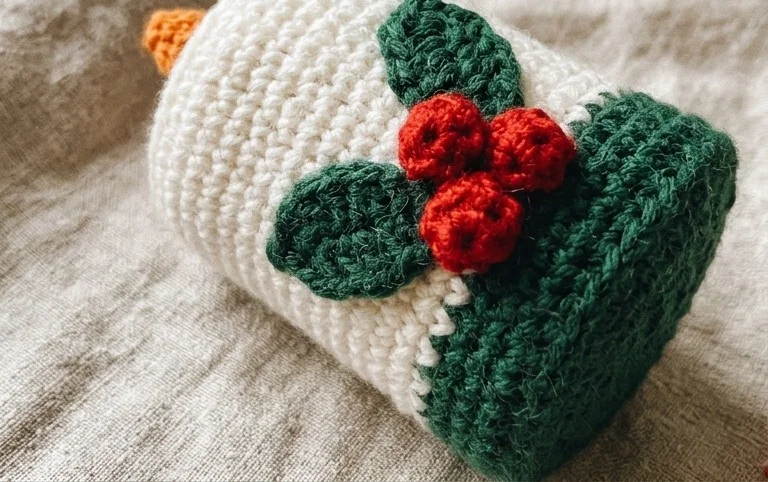
Your finished candle adds a small, handmade touch to Christmas decorating, whether you place it on a shelf or use it to dress up a gift. For a simple variation, try an ivory candle body with a warm gold flame instead of traditional holiday colors. Take a photo of your finished piece and share it on Pinterest or your favorite social media account; seeing the different colors and placements is part of the fun. If you enjoyed making this motif, explore more free crochet patterns on the blog for another evening project. Keep your leftover yarn nearby, since a second candle can be a quick way to use up a small scrap.