Easy Crochet Red Truck Ornament: Free Pattern Guide
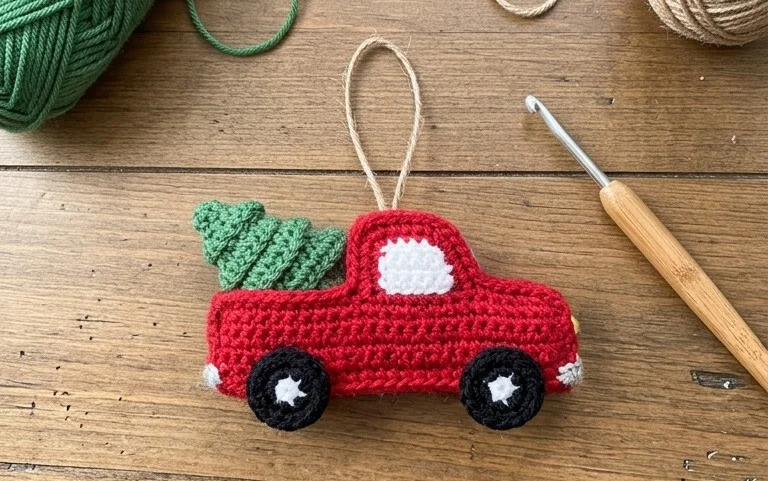
Red yarn, dark wheels, and a little cab give this crocheted truck the cheerful look of a tiny vintage pickup. Hung on a Christmas tree, tied onto a gift, or displayed on a winter shelf, it adds a handmade touch without taking up much space. The small scale makes this a satisfying project for beginners who want to practice even stitches, and the finished ornament also makes a thoughtful gift for crochet fans or anyone who collects little holiday decorations. You’ll work with simple crochet stitches and pay attention to color changes as the truck takes shape. The compact pieces are easy to handle, and the finished fabric has a firm, textured feel that helps the ornament hold its shape. This pattern is a pleasant project to pick up during a quiet evening and finish in time for the holiday decorating.
Why You’ll Love This Pattern
A firm cotton fabric and simple single crochet stitches make this crochet dishcloth useful for everyday washing and wiping. The pattern is worked flat in rows, so you can spread it on a table as you go and check that the sides stay straight. It uses one main stitch and has no shaping or seaming.
The finished cloth measures about 7¾ inches square, a handy size for kitchen tasks. One ball of cotton yarn is usually enough, and the straightforward rows make this a practical project for practicing even tension. It also works well as a small handmade gift when paired with a bar of soap or a kitchen towel.
The rows were easy to keep track of, and the cotton cloth feels sturdy without being too thick. I finished mine in an evening.
— Mara, home crocheter
Pattern Overview & Skill Level
- Skill Level: Beginner. You need to chain and make single crochet stitches.
- Approximate Time: About 2–3 hours, depending on your pace and tension.
- Construction: A flat rectangle made in rows, beginning with a foundation chain. There is no separate border or seam.
- Finished Dimensions & Sizing: About 7¾ × 7¾ inches after washing and drying flat. Dimensions can vary with yarn, hook, and personal tension.
Materials & Supplies Needed
- Yarn: About 75 yards of worsted-weight (#4) 100% cotton yarn. Choose one color, or use leftovers from cotton yarn of similar thickness.
- Hook: 5.0 mm / H-8 crochet hook. If your stitches are loose, try a 4.5 mm hook; a smaller hook can make the fabric firmer and slightly smaller.
- Notions: Tapestry needle for weaving in the starting and finishing tails, scissors, and a ruler or tape measure. A stitch marker is optional for marking the first stitch of a row.
- Substitutions: A cotton-linen blend of similar weight can work, though it may feel less soft and may drape differently. Avoid acrylic for a dishcloth intended for frequent washing and absorbency. A thicker or thinner yarn changes the cloth’s size and texture; adjust the hook to make a comfortable fabric, and expect the yardage needed to change.
Stitch Guide & Abbreviations (US Terms)
- ch = chain.
- sc = single crochet. Insert the hook in the stitch, yarn over and pull up a loop, then yarn over and pull through both loops.
- st = stitch.
- sts = stitches.
- rep = repeat.
- RS = right side, the side chosen as the front of the finished cloth.
The turning chain does not count as a stitch. Work the first single crochet of each row into the first stitch, directly below the turning chain.
Step-by-Step Pattern Instructions
Dishcloth
- Foundation: With cotton yarn, ch 32. Keep the chain relaxed so the lower edge does not pull in.
- Row 1: Sc in the second ch from the hook and in each ch across. Turn. (31 sts)
- Row 2: Ch 1, sc in each st across. Turn. (31 sts)
- Rows 3–10: Rep Row 2. (31 sts each row)
- Rows 11–20: Rep Row 2. (31 sts each row)
- Rows 21–31: Rep Row 2. (31 sts each row)
Finishing
After Row 31, fasten off, leaving a tail long enough to weave in. Thread the tail onto a tapestry needle and pass it through several stitches on the wrong side. Change direction and weave through a few more stitches to help secure the end. Weave in the foundation tail the same way. Trim the yarn close without cutting into the fabric.
Lay the dishcloth flat and check the corners. If it measures close to 7¾ inches square and the edges lie flat, it is ready to wash. If the sides flare or pull inward, compare your stitch tension across the rows; a small change in hook size may help on your next cloth.
Care & Washing Instructions
- Wash cotton dishcloths in a machine with warm water, up to about 40°C (104°F), or follow the yarn label if it gives different instructions.
- Dry flat when possible, or tumble dry on low if the yarn label permits; high heat can shrink cotton.
- Reshape the damp cloth by smoothing its edges and corners flat. Blocking is optional, but helps even out a slightly wavy edge.
Pro Tips & Common Mistakes to Avoid
- Keep the foundation chain relaxed. A tight chain can make the bottom edge narrower than the rest of the cloth; use a larger hook just for the chain if needed.
- Count the stitches at the end of each row. You should have 31 every time. Place a marker in the first stitch of a row if it is easy to miss when turning.
- Weave in each yarn tail on the wrong side, changing direction once or twice. A short pass in only one direction can loosen after repeated washing.
- To make a larger cloth, add an even number of chains and work the same number of single crochet stitches across, then add rows until the height matches the width. A larger cloth uses more yarn and takes longer; adding stitches without adding rows makes it wider but not square.
Frequently Asked Questions
Can I use a different yarn instead of cotton?
Use a similar-weight cotton or cotton-linen blend for a cloth that absorbs water and handles regular washing. Acrylic yarn is less absorbent and can feel different when wet. Check the yarn label and make a small swatch if you are unsure about the fabric.
How can I make the dishcloth smaller or larger?
For a smaller cloth, begin with fewer chains and work fewer rows, keeping the stitch count consistent across each row. For a larger cloth, add chains and rows. Changing the yarn or hook also changes the finished size, so measure as you work and plan for additional yardage.
Is this pattern suitable for a first crochet project?
Yes. It uses chains and single crochet in straight rows, with no increases, decreases, or joining. The main challenge is keeping 31 stitches in every row, so count before turning until the edges become easy to read.
May I sell dishcloths made from this pattern?
Check the designer’s terms before selling finished items made from a pattern. If you sell your work, describe the materials accurately and do not present the pattern as your own unless its terms allow that.
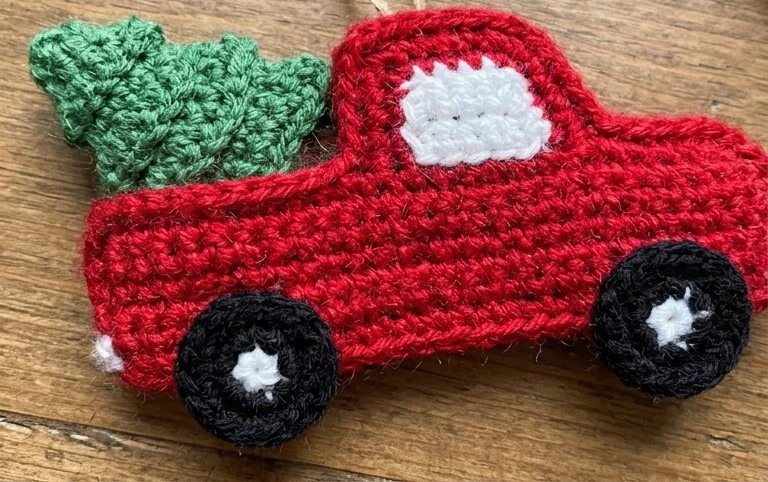
Once the last detail is in place, you’ll have a small red truck ornament with a handmade texture that stands out among glass and metal decorations. Try a different body color, such as forest green or cream, to give your next truck its own look. If you make one, share a photo on Pinterest or your favorite social media page so other crocheters can see how yours turned out. You could also tie it to a wrapped present or add it to a handmade ornament collection. Keep browsing the blog for more free crochet patterns, including small seasonal projects that are easy to fit between larger makes.